Engineered Textured Knit
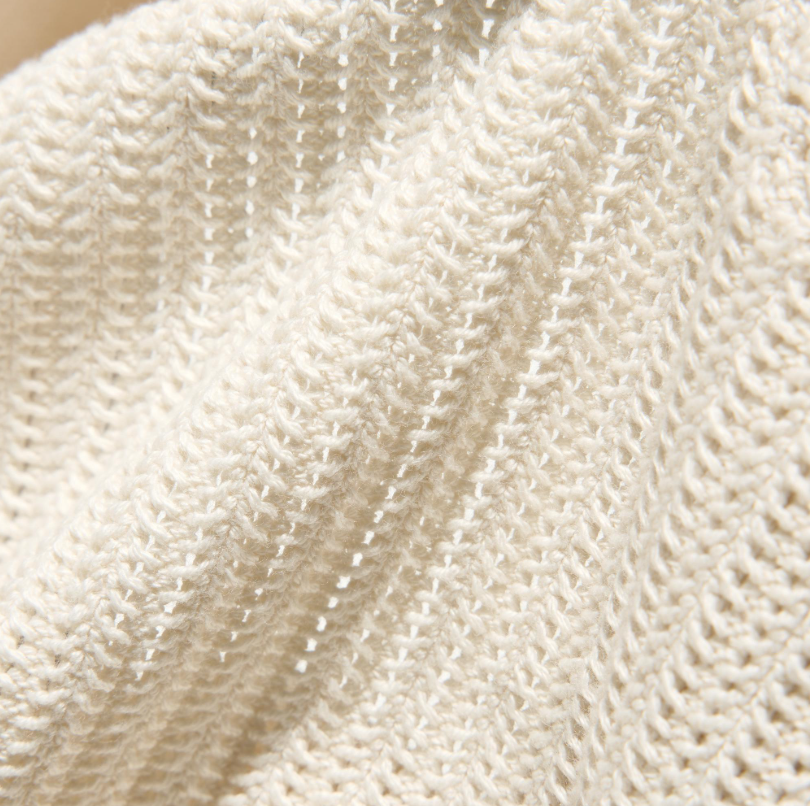
Combined stitch structures create raised and recessed surfaces.
Technical Overview
Engineered Textured Knit is a broad category of knitted constructions in which different stitch arrangements are deliberately combined to create a dimensional surface.
The texture is formed within the knitted fabric rather than simply applied to its surface through printing, embroidery or additional decoration.
The main techniques include knit and purl arrangements, tuck stitches, miss stitches, stitch transfers and needle-bed movements.
Construction & Variations
Raised and Recessed Texture
Raised and recessed structures use different stitch arrangements to create contrasting surface levels.
Selected areas can project from the main fabric surface, while surrounding sections remain flatter or become recessed.
This produces a relief effect that can be subtle or pronounced depending on the yarn, stitch arrangement and fabric density.
Sculptural and Three-Dimensional Knit
Sculptural Knit uses more pronounced changes in stitch arrangement to create a dimensional surface.
The design may include raised columns, rounded reliefs, irregular protrusions or architectural-looking structures.
Depending on the machine and construction, stitch transfers, racking, tuck sequences and different needle-bed arrangements can be used.
Mixed-Depth Textures
Mixed-Depth Textures combine structures with different levels of surface relief.
For example, small raised areas can be combined with larger recessed sections, creating a layered pattern across the garment.
The texture can be repeated regularly or developed as an irregular composition.
Yarn and Gauge Considerations
Machine Gauge and Texture Scale
Machine gauge influences the scale of the knitted loops and the level of detail that can be achieved.
Fine gauges can support smaller and more delicate textures, while coarser gauges may be suitable for larger raised patterns.
However, texture depth is not determined by gauge alone.
Yarn Composition and Surface Definition
Wool, cotton, viscose and suitable blended yarns can be considered for textured knitwear.
Wool blends may provide a soft and resilient surface, while cotton can produce a cleaner and more defined texture depending on yarn construction.
Viscose blends may create greater drape, but the resulting surface relief needs to be evaluated carefully.
Garment Applications
Raised Geometric Motifs
Raised geometric motifs can be developed using combinations of tuck, transfer and knit-purl arrangements.
Small squares, diamonds, rectangular blocks and abstract symbols can be incorporated directly into the fabric.
Unlike printed graphics, the design can be felt as well as seen.
Texture Gradation Across the Garment
The surface can gradually change from a pronounced raised texture to a smoother structure.
For example, the lower body may use a more dimensional pattern, while the upper section transitions into fine jersey.
The reverse arrangement is also possible.
Development & Quality Considerations
Fabric Distortion Between Different Structures
The fabric develops waves, local bulges or uneven areas where different structures meet.
Different yarn consumption, stitch density, loop arrangement and relaxation behaviour.
Develop the combined structures together rather than approving each one independently. Check width, length and surface flatness after relaxation and finishing. Adjust the transition where necessary.
Loss of Relief After Washing
Raised sections become flatter and recessed areas lose their definition.
Yarn relaxation, excessive mechanical action during washing, unsuitable finishing pressure or a structure that does not retain sufficient relief.
Conduct washing trials using the intended care conditions. Compare the surface before and after washing. Establish finishing conditions that preserve the intended texture without creating unstable garment dimensions.
Selected FAQs
What are the different types of Engineered Textured Knit?
Common design directions include raised and recessed textures, geometric patterns, sculptural knit structures, alternating texture panels, directional relief, micro-textures and mixed-depth surfaces.
What is the difference between Tuck Knit and Engineered Textured Knit?
Tuck Knit refers to a specific stitch construction in which a needle retains an existing loop while receiving an additional yarn loop. Engineered Textured Knit is a broader design approach that can combine tuck with knit, purl, miss, transfer and other structures to create more complex surface effects.
How are three-dimensional textures created on computerized knitting machines?
Three-dimensional textures can be created by changing needle selection, stitch formation, transfer sequences, tuck arrangements and needle-bed movements. The final effect depends on the programmed construction, machine capabilities and yarn characteristics.
Can Engineered Textured Knit be used for lightweight sweaters?
Yes. Fine-gauge constructions and carefully selected yarns can produce subtle three-dimensional effects without making the entire garment excessively heavy. The texture area, yarn count and stitch density should be developed according to the intended garment weight and drape.
Why does three-dimensional knit texture become flat after washing?
The surface may lose definition because of yarn relaxation, washing conditions, finishing pressure or insufficient structural support. The actual cause depends on the fibre, stitch arrangement and finishing process. Washing trials should be conducted before bulk production.
How can manufacturers prevent uneven texture and fabric distortion?
Manufacturers should control stitch length, yarn tension, needle selection and the transition between different structures. The complete combined fabric should be evaluated for width, length, thickness and surface flatness after relaxation and washing.
Develop with us
Have a detail
in mind?
Share a reference, a material or an effect you would like to explore. We can help develop a direction for your knitwear.
Discuss Your ProjectExplore our development process ↗