Milano Rib Knit
Compact double-bed construction for defined silhouettes.
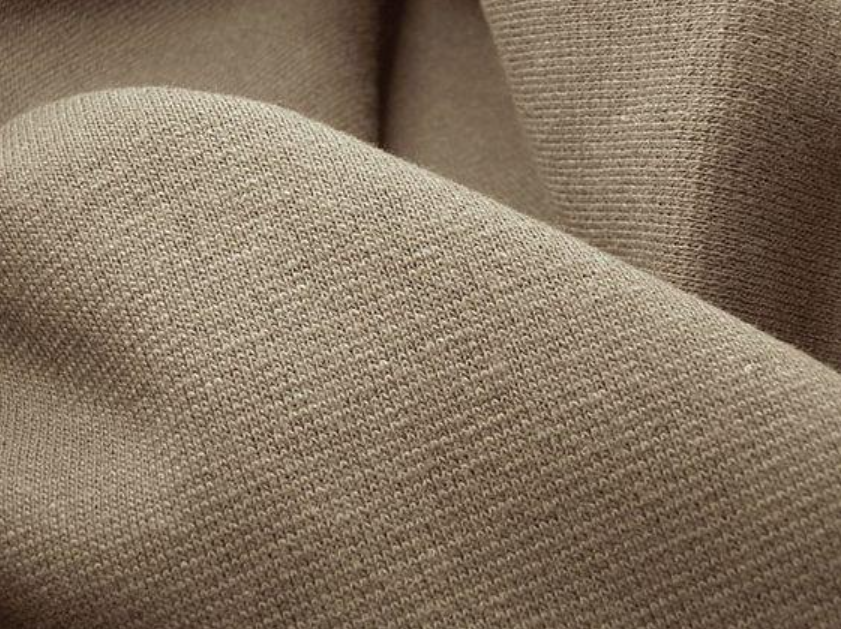
Technical Overview
Milano Rib is a double-bed weft-knitted structure that combines rib and plain stitch arrangements within a repeated knitting sequence.
The structure is designed to create a more compact and balanced fabric than conventional rib. Its surface is generally flatter, with a more controlled appearance and less pronounced vertical elasticity.
The exact stitch arrangement depends on the machine programme and the Milano construction being developed.
Construction & Variations
Half Milano
Half Milano combines a rib arrangement with an additional plain knitting course within its repeat.
In a common flat-knitting construction, one course is formed on both needle beds, followed by a course knitted on one bed while the corresponding stitches on the other bed are held.
This creates a difference between the technical face and reverse sides.
Full Milano
Full Milano uses a more balanced sequence of rib and plain knitting elements across both needle beds.
A common flat-knitting sequence includes a rib course followed by separate plain knitting courses on the front and back beds.
Compared with Half Milano, this construction generally produces a more compact and balanced fabric, with greater structural support.
Yarn and Gauge Considerations
Machine Gauge
Machine gauge refers to the number of needles per inch on the needle bed.
The choice of gauge influences the available needle spacing and the type of yarn and stitch construction that can be used.
A finer gauge can support a more refined Milano surface, while a coarser gauge can produce a more pronounced stitch appearance.
Yarn Composition and Yarn Count
Wool, merino wool, cashmere, cotton and suitable blended yarns can be evaluated for Milano development.
Each fibre composition behaves differently in terms of bending, softness, recovery, relaxation and finishing compatibility.
Wool and wool blends are relevant to structured sweaters and cardigans where a balance between body and comfort is required.
Garment Applications
Knitted Blazers and Soft Tailoring
Milano Rib can be used to develop knitted blazers, soft jackets and tailored cardigans.
Its relatively compact construction helps the garment maintain a more defined outline than a loose, conventional jersey.
Designers can use it for lapels, front panels, collar sections and the main body.
Structured Cardigans
A conventional cardigan often relies on ribbed edges and a relatively soft jersey body.
Milano Rib offers another direction: the main body can be developed with a more compact structure, while conventional rib is retained at the cuffs and selected openings.
This creates a clearer difference between the garment body and its finishing details.
Development & Quality Considerations
Dimensional Changes After Relaxation and Washing
The fabric changes width or length after washing, causing the finished garment to differ from the approved measurements.
Wool relaxation, fibre swelling, stitch length, yarn composition and finishing conditions can all influence dimensional changes.
Measure the fabric immediately after knitting, after dry relaxation and after washing. Establish garment measurements using the approved finished fabric condition.
Excessive Stiffness or Loss of Drape
The finished fabric feels too rigid or heavy for the intended garment.
An unsuitable combination of yarn diameter, stitch length, fabric density and structural construction.
Evaluate the fabric's bending behaviour and drape during development. Adjust yarn specification and stitch settings according to the desired garment character. Compare Half Milano and Full Milano where both are technically suitable options.
Selected FAQs
What is the difference between Half Milano and Full Milano?
Half Milano uses a less fully balanced knitting sequence, resulting in distinguishable face and reverse characteristics. Full Milano incorporates a more balanced sequence of rib and plain knitting elements across both needle beds, generally producing a more compact and balanced fabric. Exact construction details depend on the machine programme.
What is the difference between Milano Rib and 1×1 Rib?
1×1 Rib is primarily designed around alternating knit and purl wales and offers considerable crosswise elasticity. Milano Rib incorporates additional plain knitting elements into the double-bed structure, generally producing a more compact fabric with less extension. Their intended garment applications are therefore different.
What is the difference between Milano Rib and Interlock?
Both are double-bed knitted structures, but their stitch arrangements differ. Interlock is based on intermeshing loop constructions that create a relatively smooth double-knit surface. Milano Rib combines rib and plain knitting elements, producing a different fabric density, thickness and structural character.
What garments are suitable for Milano Rib?
Milano Rib can be developed for knitted blazers, structured cardigans, waistcoats, pullovers, dresses and other garments requiring a more defined silhouette. The choice of construction depends on the intended weight, flexibility and drape.
Why does Milano Rib fabric change dimensions after washing?
Relaxation of the knitted loops, fibre behaviour, stitch density and finishing conditions can all influence dimensional changes. Wool and other fibre compositions may respond differently to washing. Fabric measurements should be taken before and after the intended washing process.
How can manufacturers prevent Milano Rib from becoming too stiff or losing its shape?
The main factors include yarn diameter, stitch length, fabric density, knitting sequence and finishing conditions. These should be evaluated together through physical swatches and finished garment trials. The objective is to achieve the required body and drape rather than simply making the fabric as compact as possible.
Develop with us
Have a detail
in mind?
Share a reference, a material or an effect you would like to explore. We can help develop a direction for your knitwear.
Discuss Your ProjectExplore our development process ↗