Rib Knit Structures
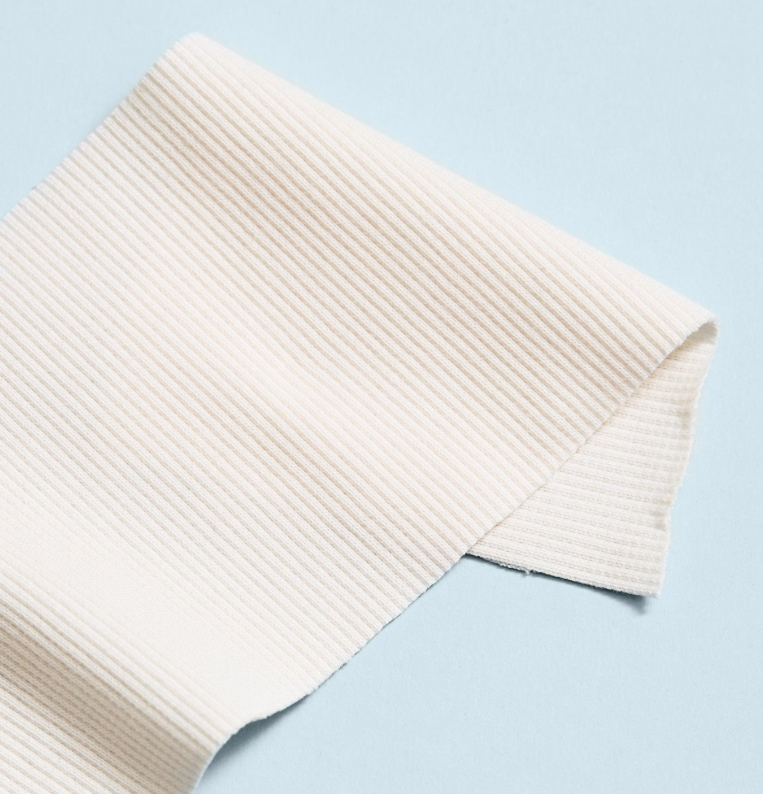
Alternating knit and purl wales with crosswise stretch.
Technical Overview
Rib Knit is generally produced on a double-bed knitting machine, using two opposing needle beds. Knit and purl wales are arranged alternately to create a fabric with vertical ribs on its surface.
Unlike Single Jersey, which is formed on one needle bed, Rib Knit has a more balanced double-bed construction. The loops can open and expand across the fabric width, giving rib its characteristic crosswise elasticity.
The two sides of a conventional rib fabric often have a similar appearance, although the visible rib definition depends on the construction and yarn used.
Construction & Variations
1×1 Rib
1×1 Rib alternates one knit wale with one purl wale.
It creates a relatively fine and regular vertical rib pattern. When properly constructed, the fabric can expand considerably across its width and is frequently used where flexibility and close fitting are required.
Typical applications include cuffs, neckbands, waistbands, fitted tops and full-rib sweaters.
2×1 Rib
2×1 Rib arranges two knit wales followed by one purl wale.
The alternating arrangement produces a different visual rhythm from 1×1 Rib. Its surface has a more varied balance between the wider and narrower sections of the rib pattern.
It can be used for sweater bodies, cardigan panels, fitted garment sections and designs requiring a more distinctive vertical texture.
2×2 Rib
2×2 Rib alternates two knit wales and two purl wales.
Compared with 1×1 Rib, it produces a wider and more pronounced rib pattern. It is commonly used in cuffs, collars, waistbands and full-garment designs.
On a garment body, 2×2 Rib can create a more visible vertical texture and a structured appearance, particularly when developed with suitable wool or blended yarns.
Yarn and Gauge Considerations
Machine Gauge and Rib Definition
Machine gauge determines the number of needles per inch on the needle bed.
A finer gauge can support a more delicate rib appearance, while a coarser gauge generally produces a more pronounced stitch structure.
However, gauge alone does not determine rib width, fabric weight or elasticity. Yarn diameter, stitch length and needle arrangement must also be considered.
Stitch Length and Rib Density
Stitch length influences the size of the knitted loops and therefore affects fabric width, weight, elasticity and surface definition.
A change in stitch length can alter the degree of rib contraction and the way the fabric responds to relaxation.
The final setting should be established through physical sampling. It should not be selected solely from a visual reference.
Documented development samples
The development notes document a 2×1 rib in 2/48 Nm wool, a 1×1 rib in 2/24 Nm 72% viscose and 28% polyester, and rib comparisons in 2/26 Nm wool.
Garment Applications
Full-Garment Rib Construction
Instead of limiting rib to cuffs and hems, designers can use it throughout the garment body.
A full 1×1 or 2×2 rib sweater creates a continuous vertical texture. Depending on the yarn and construction, the fabric can be developed into close-fitting tops, relaxed pullovers and ribbed cardigans.
The design needs to account for the natural width contraction and extension of rib fabric. Garment measurements should be established using relaxed and finished samples rather than calculated from the flat knitting width alone.
Combining Different Rib Ratios
Different rib arrangements can be used within one garment to create changes in visual rhythm.
For example, a wider rib section can be placed across the body, while a finer rib is used around the waist or sleeves.
This creates a subtle contrast without introducing another colour or decorative material.
Development & Quality Considerations
Excessive Width Contraction and Dimensional Changes
The fabric becomes significantly narrower after knitting or finishing, causing the finished garment to be smaller than expected.
Rib has a natural tendency to contract across its width. The degree of contraction is influenced by the rib ratio, stitch length, yarn properties, knitting tension and relaxation conditions.
Measure the fabric immediately after knitting and again after relaxation and finishing. Establish garment dimensions from the relaxed fabric. Do not use machine-off width as the final garment cutting or programming reference.
Loss of Elasticity and Recovery
Cuffs, necklines or fitted garment areas become loose after wearing or washing and do not return to their original dimensions.
Yarn characteristics, unsuitable stitch settings, excessive finishing tension, heat exposure and repeated mechanical stress can all affect recovery.
Evaluate stretch and recovery before and after washing. Select yarns and construction settings suitable for the intended garment use. Confirm the finished measurements after the intended finishing process.
Selected FAQs
What are the most common types of Rib Knit?
Common types include 1×1 Rib, 2×1 Rib, 2×2 Rib, 3×2 Rib and 3×3 Rib. Designers can also develop irregular and engineered rib structures by changing the number and arrangement of knit and purl wales.
What is the difference between 1×1, 2×1 and 2×2 Rib?
The numbers describe the arrangement of knit and purl wales. 1×1 alternates one knit wale and one purl wale. 2×1 uses two knit wales followed by one purl wale, while 2×2 uses two of each. These arrangements create different rib patterns and fabric characteristics. Their actual stretch and recovery must be assessed through physical testing.
Which Rib Knit structure is best for fitted sweaters?
1×1 and 2×1 Rib are useful starting points for fitted knitwear, but neither is universally the best option. The choice depends on yarn composition, stitch length, machine gauge, fabric density and the required fit. Sample development and garment measurements are necessary before confirming the construction.
How can designers use different rib structures to create shaping effects?
Designers can position different rib widths and arrangements around the waist, side panels, shoulders and sleeves. Changes in rib direction and fabric elasticity can influence the visual proportions and fit of a garment. The final shaping must be confirmed through pattern development and garment sampling.
Why do ribbed cuffs and necklines lose their elasticity?
Possible causes include unsuitable yarn characteristics, excessive relaxation, inappropriate stitch settings, finishing conditions and repeated mechanical stress. Elasticity and recovery should be evaluated before and after washing to determine whether the construction is suitable for the intended garment.
How can manufacturers prevent rib fabric from shrinking or becoming uneven after washing?
Manufacturers should evaluate yarn composition, rib arrangement, stitch length, knitting tension and finishing conditions. Fabric width and length should be measured before and after relaxation and washing. Garments combining different structures should also be checked for dimensional compatibility.
Develop with us
Have a detail
in mind?
Share a reference, a material or an effect you would like to explore. We can help develop a direction for your knitwear.
Discuss Your ProjectExplore our development process ↗