Hand Embroidery on Wool Knitwear
Two floral embroidery samples show how hand stitching interacts with lofty wool bases at 5GG and 7GG.
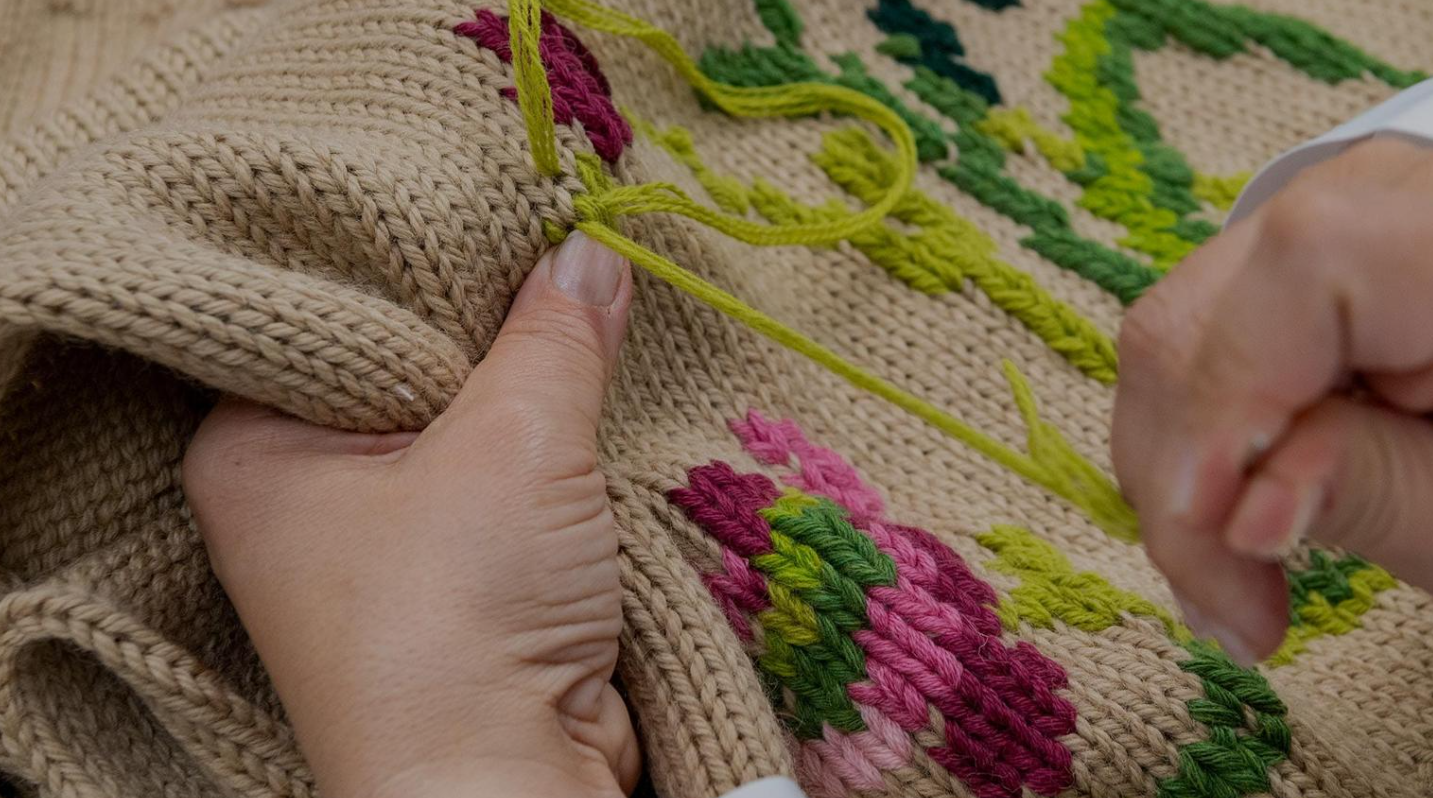
S01
Multicolour Floral Embroidery on 5GG Wool
Pink, burgundy and green floral motifs sit on a lofty 5GG base knitted from 2/26, 100% wool yarn.
The embroidery yarn and stitch tension need to suit the knitted loops so the motifs sit evenly on the textured surface.
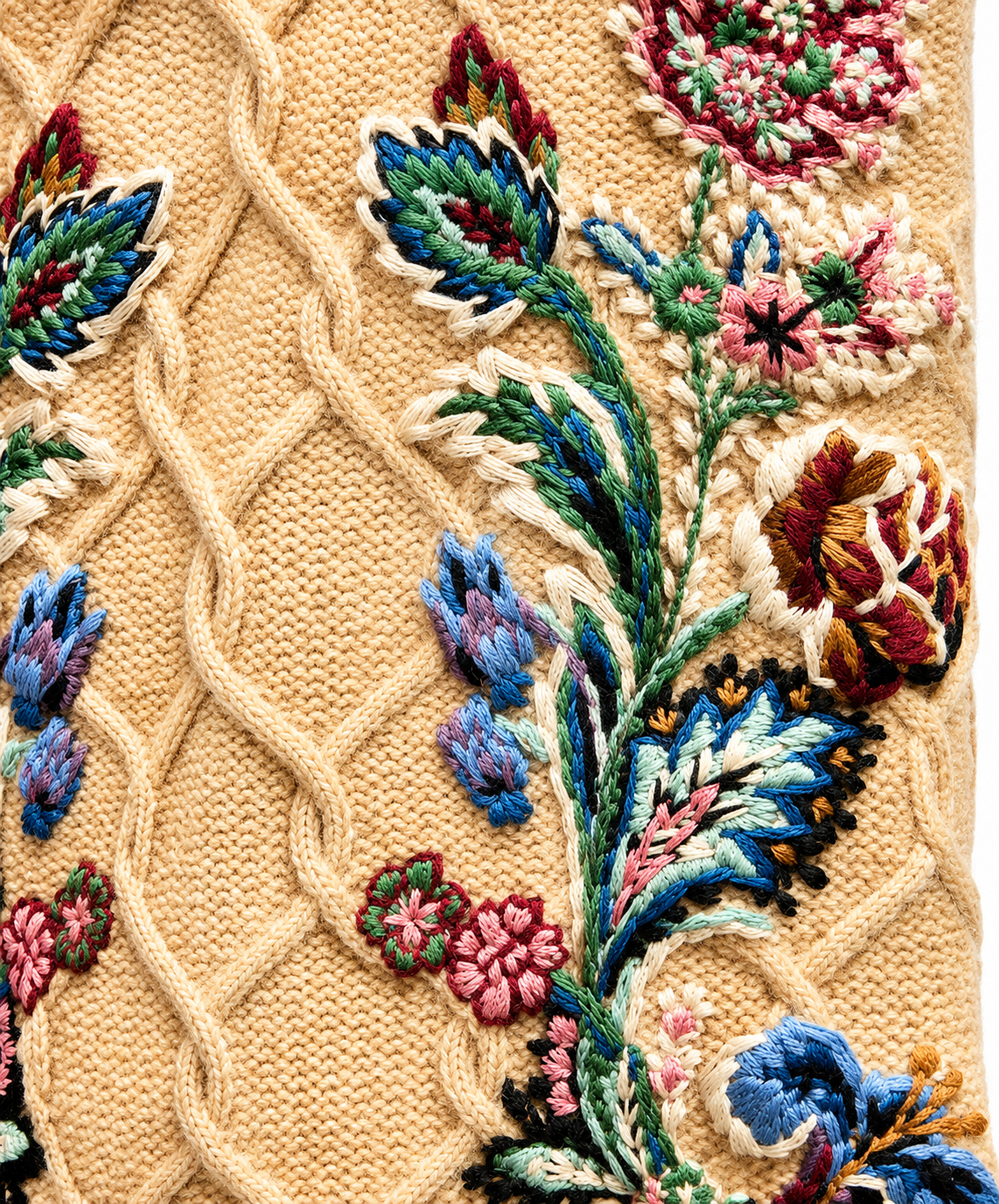
S02
Botanical Hand Embroidery on 7GG Cashwool
The 7GG base uses Nm 2/30, 100% Cashwool wool yarn. Raised knit lines run alongside layered floral and botanical embroidery.
The embroidery needs to retain its definition where the stitchwork crosses a raised or flexible part of the knitted base.
Technical Development Considerations
For the 5GG sample, begin with the knit relaxed. Trial embroidery yarn thickness, stitch tension and motif density on the actual wool base. Excessive tension can pull the loops together, and dense stitching can stiffen the decorated area.
On the 7GG sample, map the motif against the raised knit lines before stitching. Check colour definition, thread security and the reverse side after the fabric has relaxed, then review appearance and dimensions under the intended care conditions.
Selected FAQs
How can manufacturers prevent puckering in embroidered knitwear?
Puckering can occur when embroidery tension pulls the knitted loops together or when the fabric is stretched during the stitching process. Development should begin with the knitted fabric in its relaxed condition. Stitch density, motif dimensions and any stabilising material should be evaluated together. After embroidery, the fabric should be allowed to relax before inspection. The final method should be confirmed through sampling on the intended wool knit construction.
How can embroidery be combined with raised knit structures?
Embroidery can be developed alongside raised knit structures, provided the two constructions are compatible. The knitted details should be identified before the embroidery layout is finalised. Raised areas may influence needle access, stitch placement and the visibility of decorative yarns. Sampling should establish whether embroidery crosses, follows or sits between the raised structures. This evaluation helps protect the knitted construction while maintaining a balanced surface appearance.
Develop with us
Have a detail
in mind?
Share a reference, a material or an effect you would like to explore. We can help develop a direction for your knitwear.
Discuss Your ProjectExplore our development process ↗