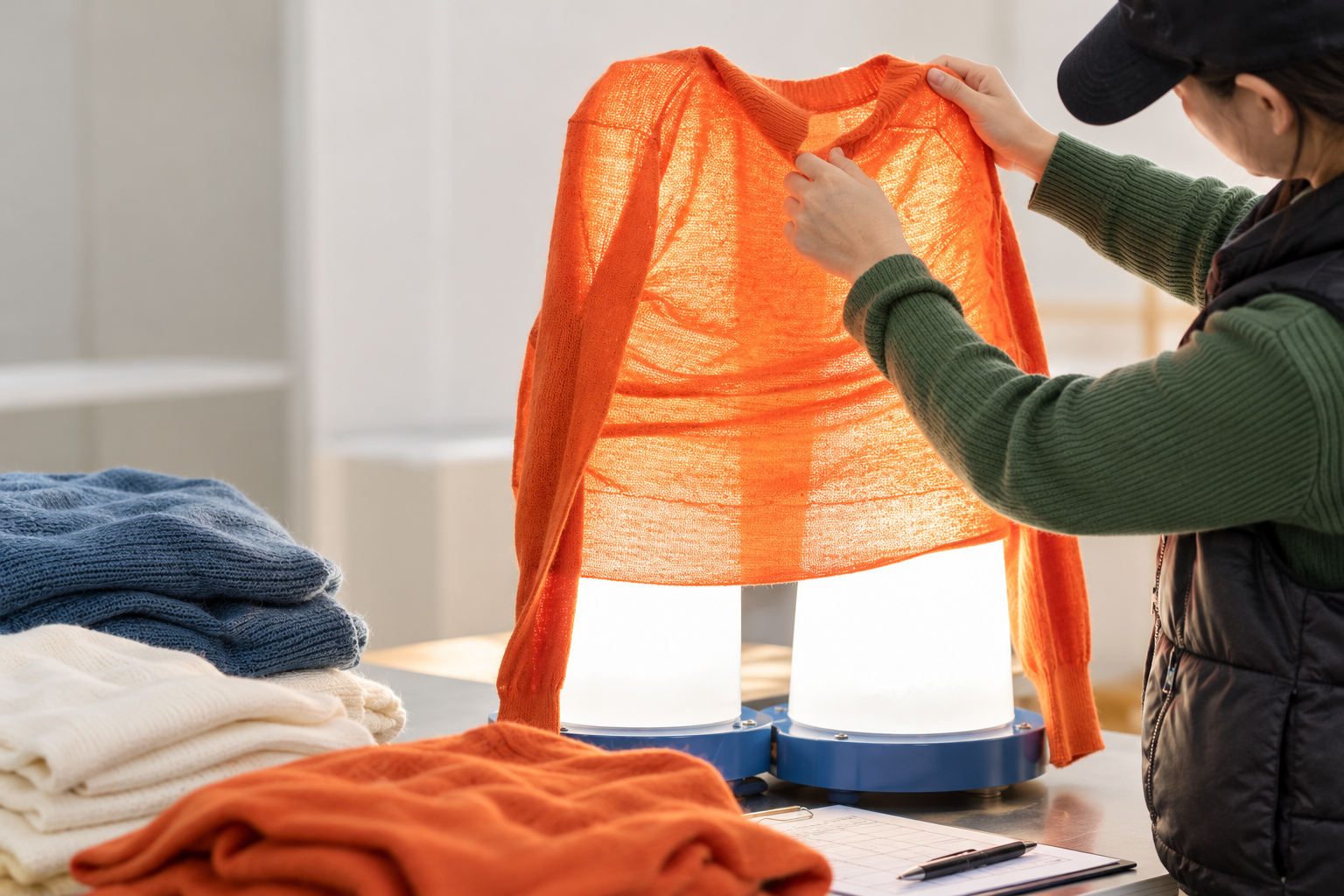
An approved knitwear sample is an important milestone, but it is not the end of product development. A sample may be carefully adjusted by an experienced technician until it meets the designer's expectations. Once the same style moves into bulk production, however, the manufacturer faces a different challenge. The approved specifications must be carried through repeated manufacturing operations, sometimes involving several production teams and specialist workshops.
This becomes particularly important when a garment combines fine-gauge knitting with handwork, embroidery, embellishment or special finishing. At VIA KNIT, quality management is part of the production process rather than a task reserved for final inspection. Our approach involves material verification, technical preparation, in-process inspections, corrective action and final garment checks.
We aim to identify and resolve problems as early as possible, before they affect subsequent operations or the client's delivery requirements.
Quality Control Begins During Sample Development
Some manufacturing problems can be identified before bulk production starts. A particular stitch construction may affect garment dimensions. A neckline may require careful attention to elasticity. An elaborate embroidered detail may need further development before it can be reproduced consistently. These issues are easier to address when the garment is still being developed. At VIA KNIT, technical problems during sampling are handled by the relevant knitwear technicians.
Our merchandising team also records issues encountered during sample development. These records help the production team understand what required adjustment and which details need attention when preparing for bulk manufacturing. The purpose is not simply to document previous mistakes. It is to reduce the likelihood of encountering the same problems again.
What Happens When Yarn Arrives at the Factory?
Yarn quality and consistency are important foundations for the finished garment. Before production, VIA KNIT checks incoming yarn information, including labels, declared composition, yarn count, colour, weight, dye-lot identification and visible colour differences. Small knitted swatches may also be prepared for comparison, with colour-related checks carried out according to the material and project requirements. Our purchasing team considers the supplier's previous performance as part of the process.
Established suppliers with reliable delivery histories may require a different inspection focus from unfamiliar sources, but the yarn must still meet the relevant order requirements. If an issue is identified, our purchasing team contacts the supplier to investigate and coordinate the necessary response. Confirming materials before production helps prevent yarn-related problems from affecting multiple downstream processes.
Turning an Approved Sample into Production Requirements
Once the designer has approved the initial sample, the manufacturer still needs to prepare the style for bulk production. At VIA KNIT, issues identified during sample development are recorded and reviewed as part of production preparation. Before the bulk order begins, we also produce a pre-production garment sample to verify the relevant construction and manufacturing requirements under the intended production conditions. This stage has a different purpose from the first development sample.
The initial sample helps establish the product's appearance, fit and construction. The pre-production sample provides an opportunity to check whether the approved requirements can be followed in the production process. Technical details such as knitting programs, yarn-feeding arrangements, measurements and linking methods may need particular attention. For complex knitwear, this additional preparation can help identify problems before they are repeated across an entire production run.
Quality Checks During Flat-Knitting Production
Quality control during knitting involves more than looking for visible fabric defects. At VIA KNIT, dedicated production QC personnel follow the knitting process. Their checks include relevant technical requirements, yarn-feeding arrangements, garment measurements and whether the machine program is suitable for bulk production. During knitting, inspectors carry out sampling checks for problems such as dropped stitches, incorrect stitch formation, colour differences and dimensional abnormalities.
Once panels come off the knitting machines, they are passed to a separate inspection team. At VIA KNIT, knitted panels undergo 100% inspection after knitting. When an issue is found, the team assesses whether the panel can be repaired appropriately or needs to be knitted again. The decision depends on the defect and the required garment quality. Our intention is to prevent defective components from continuing into later manufacturing stages without appropriate correction.
Why Linking, Hand Finishing and Garment Finishing Need Particular Attention
After knitting, garment components move through linking, seaming, hand-finishing and other finishing operations. Each stage introduces its own quality considerations. During linking and seaming, issues may include uneven seam allowances, inconsistent edge handling, puckering, excessive seam tension and misalignment at colour changes. A seam may look acceptable but still lack the elasticity needed for the garment to function properly.
Hand-finishing operations require attention to small details, including the appearance and neatness of local joins and finishing work. During final garment finishing, our team checks measurements, handle, workmanship and the overall result after pressing. In our experience, linking and garment finishing are among the stages that more frequently require corrective work. These operations therefore benefit from close technical supervision and timely QC feedback.
A Nordic Client's Project: When Two Centimetres Made a Difference
During production for a Nordic designer brand, a QC check identified insufficient stretch at the neckline of a knitted garment. For that particular style, the required neckline extension was at least 32 centimetres under the applicable checking method. The affected neckline extended to approximately 30 centimetres. Although the difference was only two centimetres, it created a practical problem: the neckline could be difficult to pull over the wearer's head.
Further investigation found that the required elastic thread had not been incorporated during linking. The seam tension was also too tight. Once the cause was identified, the production manager organised corrective work and adjusted the production arrangements. The affected work was corrected without delaying the client's scheduled delivery. The case illustrates why knitwear inspection cannot focus exclusively on surface appearance.
A relatively small difference in a functional measurement can affect whether a garment performs as intended. The 32-centimetre requirement was specific to this style; it is not a universal standard for all knitted necklines.
Managing Quality Across Specialist Production Workshops
Complex knitwear may involve several specialist manufacturing processes. Hand crochet, embroidery, beading, printing and garment dyeing are not necessarily carried out in the same facility. At VIA KNIT, we coordinate these operations with established specialist workshops according to the requirements of each project. The involvement of external workshops does not remove our responsibility for checking the work.
During development, our team identifies potential risks and follows the preparation of relevant technique samples. Before bulk production, the applicable samples and workmanship requirements are reviewed for approval. When specialist work is returned to VIA KNIT, the received pieces undergo 100% inspection before proceeding to the next operation. Inspectors compare the workmanship, decorative details and overall appearance with the approved sample and relevant technical requirements.
Garments that fail these checks are not allowed to proceed as acceptable work. For embellished knitwear, this is particularly important. An approved sample establishes the intended result. Bulk production should not introduce unapproved differences simply because more people or workshops are involved.
What Happens When the Same Quality Problem Appears Repeatedly?
A quality issue affecting one garment may be an isolated occurrence. When the same problem appears repeatedly, it may indicate a wider issue involving materials, technical specifications, machine settings or operating methods. At VIA KNIT, QC personnel report recurring problems to the relevant production team. When necessary, the production manager suspends the affected operation and coordinates an investigation with the technical team.
Production resumes only after the cause and appropriate corrective action have been established. The issue is recorded so that the team can review whether it was an isolated incident or part of a recurring pattern. These records also help inform future production decisions. Our approach is to address the cause rather than repeatedly repair the same defect without understanding why it occurs. Products that fail the required quality checks must not proceed to the next operation as acceptable items.
A Real Quality-Control Case: Scratched Sequins in an Embellished Order
During inspection of a complex embroidered and sequinned production order, VIA KNIT's QC team reported an approximately 9% scratched-sequin issue. The reporting basis is not specified here; this figure should not be interpreted as a confirmed percentage of garments, orders or all sequins. Based on the appearance requirements of the product, our inspectors determined that the affected workmanship would not meet the client's expected quality. We therefore contacted the specialist embroidery workshop and required the affected work to be remade. The corrective work created a delivery challenge.
Some garments could be completed as planned, while the affected pieces required additional production time. Rather than ship garments that did not meet the required appearance standard, we informed the client and proposed a two-part delivery arrangement. The garments that passed inspection were shipped first. The affected quantity was scheduled for later shipment after the necessary work and checks had been completed.
This was not a situation in which every part of the original production plan proceeded without difficulty. There was a quality problem, and part of the delivery schedule was affected. The important decision was to address the issue rather than release unacceptable garments. For us, quality management also means communicating clearly when a problem has consequences for the client.
Final Garment Inspection Before Shipment
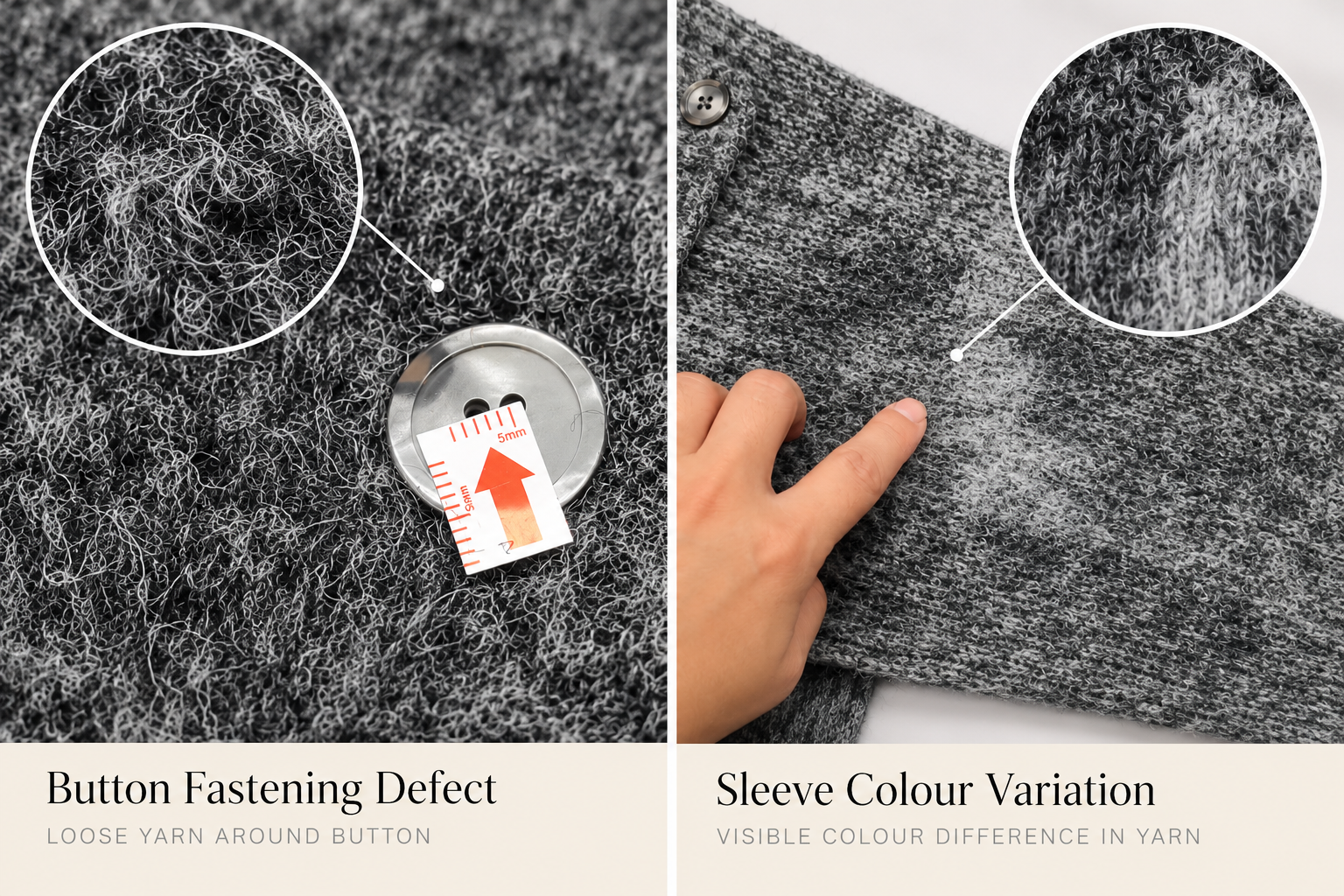
In-process checks are important, but they do not replace final garment inspection. At VIA KNIT, finished garments undergo 100% QC inspection before shipment. This includes garment measurements, surface appearance and the relevant workmanship details. Additional attention is given to the requirements of complex styles, including embellishments and other specialist techniques. Some clients also arrange independent third-party inspections, particularly for larger production orders.
When requested, VIA KNIT coordinates with the appointed inspection company. We can also work with client-specified AQL sampling requirements where these have been agreed for the order. It is important to distinguish between the factory's own garment-by-garment inspection and an AQL-based sampling inspection. They serve different purposes and can be used alongside one another. Neither should be presented as a guarantee that defects can never occur.
Quality Management Is Also About Responsibility
For international designer brands, reliability depends on more than receiving an attractive sample. They need confidence that the manufacturer understands the agreed specifications and will take responsibility when production problems arise. At VIA KNIT, QC personnel focus on identifying and reporting quality issues. Production managers coordinate the necessary production response, while technicians address the underlying technical problems.
This separation of responsibilities helps prevent delivery pressure from becoming a reason to accept defective garments. Our preference is to identify and resolve issues on the production floor, reducing unnecessary rework and avoiding preventable delays. However, when a serious quality issue affects the agreed delivery plan, it is important to communicate the situation and propose a practical solution. A reliable manufacturing relationship is not based on pretending that production problems never happen.
It is built through clear requirements, appropriate checks and responsible decisions when something needs to be corrected.
Quality Is Built Throughout the Manufacturing Process
Knitwear quality depends on decisions made across the entire manufacturing process. Yarn preparation, knitting, linking, hand-finishing, specialist workmanship and final inspection all contribute to the result. A final inspection can identify unacceptable garments, but it cannot replace the technical preparation and process management that should come before it.
At VIA KNIT, our approach is to identify potential risks during development, verify requirements before production and follow quality at the relevant manufacturing stages. When a problem occurs, the objective is to understand its cause and prevent it from continuing. When corrective work is necessary, it should be completed according to the agreed quality requirements.
Good knitwear quality control is not simply about finding defects before shipment. It is about managing the process so that fewer defects reach that stage in the first place.
Looking for a Knitwear Manufacturing Partner?
If your collection involves fine-gauge knitwear, complex embroidery, hand crochet or other specialist techniques, VIA KNIT can discuss the development and production requirements of your project. Share your design specifications, quality expectations and estimated order quantities with our team.