An independent fashion designer plans to produce 50 knitted sweaters. The manufacturer accepts the order, but the designer's preferred yarn colour requires a minimum purchase of 20 kilograms. At first, this can seem contradictory. If the factory can produce 50 garments, why does the material come with a separate minimum quantity? The answer is that garment MOQ and yarn MOQ are determined at different stages of production.
A garment manufacturer's minimum order quantity depends on its production arrangements, construction requirements and order structure. Yarn suppliers, meanwhile, set purchasing conditions according to stock availability, dyeing methods and manufacturing requirements. At VIA KNIT, a knitwear development and manufacturing company based in Dongguan, China, we regularly work through these questions with independent designer brands.
Understanding the difference can help designers avoid unexpected material costs and delays before their collections reach production.
Why Are Yarn MOQ and Garment MOQ Different?
VIA KNIT supports small-batch knitwear production starting from 50 pieces per style, subject to the applicable colour and size requirements. That does not mean every yarn can be sourced in a quantity that corresponds exactly to a 50-piece garment order. Consider a designer developing a cashmere-blend sweater. If the requested yarn and colour are available from stock, sourcing may be relatively straightforward.
If the designer wants a colour outside the supplier's available range, however, custom dyeing may be necessary. The yarn supplier may require a minimum purchase that exceeds the amount needed to produce the garments. The factory's garment MOQ has not changed. What has changed is the purchasing requirement for the selected material. This is why yarn availability should be discussed alongside garment quantities during the early stages of development.
Why Are Stock Yarns Useful for Small Production Runs?
In VIA KNIT's sourcing experience, certain stock yarns can be purchased in quantities as small as one kilogram. Where sufficient stock is available, purchasing five, ten or twenty kilograms of the same yarn is generally possible. This flexibility can be helpful when a brand wants to develop a limited number of styles or produce a small initial collection. There is one important distinction, however.
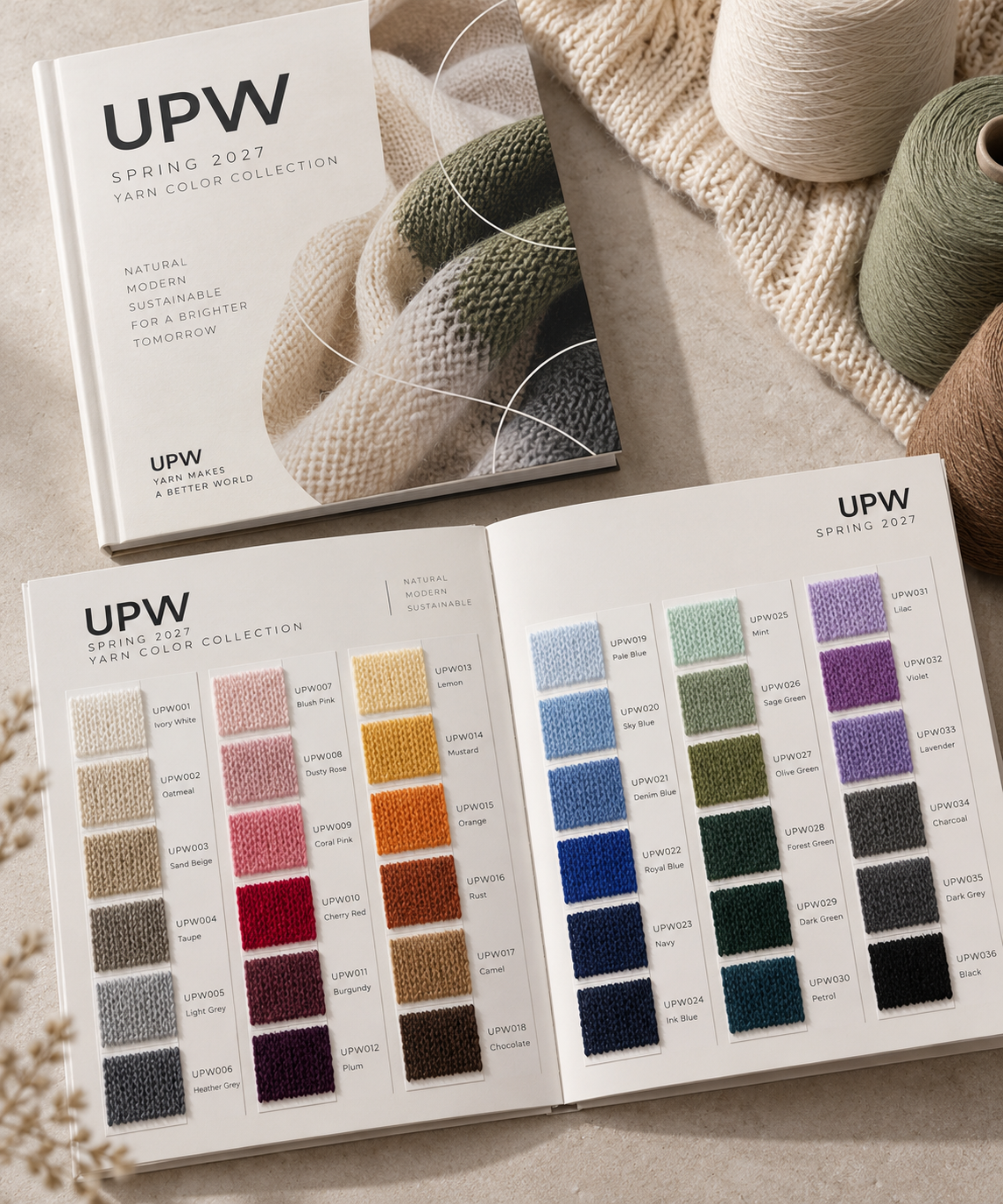
A colour appearing on a supplier's stock shade card does not guarantee that the required quantity is immediately available. Actual inventory and delivery conditions still need to be confirmed before placing the yarn order. Stock yarns should not automatically be considered inferior to custom-produced materials. Many established yarn suppliers offer high-quality yarns in regular colour ranges.
The relevant question is whether the available yarn meets the designer's intended fabric characteristics and quality requirements. For a small production run, a suitable stock yarn can sometimes provide a better balance between material choice and purchasing flexibility.
Why Can Custom-Dyed Yarn Require 5, 20 or Even 100 Kilograms?
There is no universal minimum order quantity for custom-dyed yarn. In our sourcing experience, certain conventional wool and cotton yarns may be available for custom dyeing from approximately five kilograms. Some specialised yarns require larger quantities, such as twenty kilograms. For certain top-dyed or colour-blended yarns, depending on the supplier and manufacturing process, the required quantity may be 30, 100 or even 200 kilograms.
These are examples from actual sourcing situations, not fixed industry standards. Lead times also vary. Some conventional custom-dyeing arrangements typically require around 15–20 days. In these cases, the overall production schedule may be extended by approximately the same amount. Other yarns may involve additional spinning or colour-production processes and require more time.
Before approving a custom colour, designers should understand the supplier's minimum purchase quantity and the expected material preparation period. Both can influence the feasibility of a small-batch order.
How Much Yarn Is Actually Needed for 100 Sweaters?
The number of garments alone is not enough to calculate yarn consumption accurately. Two sweaters made from the same fibre may have different weights because of their dimensions, machine gauge, stitch construction and finishing requirements. At VIA KNIT, our technical team weighs knitted panels after they come off the machine and also checks the weight of finished garments. These measurements help us evaluate material consumption and plan subsequent production.
Sampling requires a different approach from bulk manufacturing. During development, additional yarn may be needed for swatches, construction trials and revisions. For certain projects, the yarn allocated to sample development may amount to two or three times the weight of the finished garment. This does not mean that all the additional yarn becomes waste. Some is used for the trials and development work needed to establish the garment specification.
Once the sample is approved and the construction is established, bulk yarn requirements can be estimated more accurately. For conventional production, VIA KNIT commonly plans an additional material allowance of approximately 10–15% against estimated garment consumption. This is a planning allowance rather than a guaranteed actual waste percentage. Complex stitch structures, demanding knitting operations and specialised workmanship can require a different allowance.
Actual purchasing requirements should always be assessed against the specific garment.
Does the First Sample Have to Use the Final Colour?
Not necessarily. For some designs, the first sample is primarily intended to evaluate silhouette, fit and construction. If the final yarn colour is not available, the manufacturer may discuss using a suitable stock colour for initial development. This can allow the designer to review the garment while the intended colour is being sourced or developed. The approach is not appropriate for every project.
Where colour or the dyeing process affects the material characteristics that need to be evaluated, further testing may be necessary. Using an alternative colour for the first sample does not automatically mean that the final material has been approved. The decision should reflect what the designer needs to confirm at each stage.
A US Designer's Project: Developing a Custom Colour Without Delaying the First Sample
An American designer brand approached VIA KNIT with a specific colour requirement for a cashmere-blend knitwear project. The desired shade was not among the available stock colours for the selected CONSINEE yarn. Rather than waiting for custom colour development before beginning the garment sample, we suggested using a suitable stock shade for the first prototype. This allowed the designer to evaluate the initial design and fit. At the same time, we contacted CONSINEE about developing the requested colour.
Three colour submissions, identified as A, B and C, were prepared for the designer to compare. After reviewing them, the client selected the preferred shade. For this particular cashmere-blend yarn, the supplier's custom-dyeing minimum was 20 kilograms. The selected colour was subsequently used for further sample approval and bulk production. The project illustrates how garment development and custom colour development can be coordinated.
The first sample provided information about the garment, while the colour submissions helped the designer make a separate material decision. Both were necessary before the project could move forward with the intended specification.
A Norwegian Client's Project: When a Stock Colour Was the Better Choice
A Norwegian client wanted to use a particular UPW yarn colour for a production order. The material involved a colour-blended yarn production process. Under the supplier's conditions for that project, custom production required a minimum purchase of 100 kilograms. Spinning and colour preparation would take approximately 30 days. This presented a scheduling problem. Proceeding with the original colour requirement would have affected the client's planned production timeline.
After reviewing the situation together, we suggested considering an available production shade from UPW's existing colour range. The client eventually selected a stock colour for bulk production. Unlike the American designer's project, this development did not continue with a custom colour. The decision reflected the practical requirements of the order. In small-batch knitwear, good sourcing advice is not always about finding a way to manufacture the most specialised material.
Sometimes it means recognising when an existing alternative is more appropriate for the project's quantity and schedule.
How Does VIA KNIT Evaluate Yarn Suppliers and Materials?
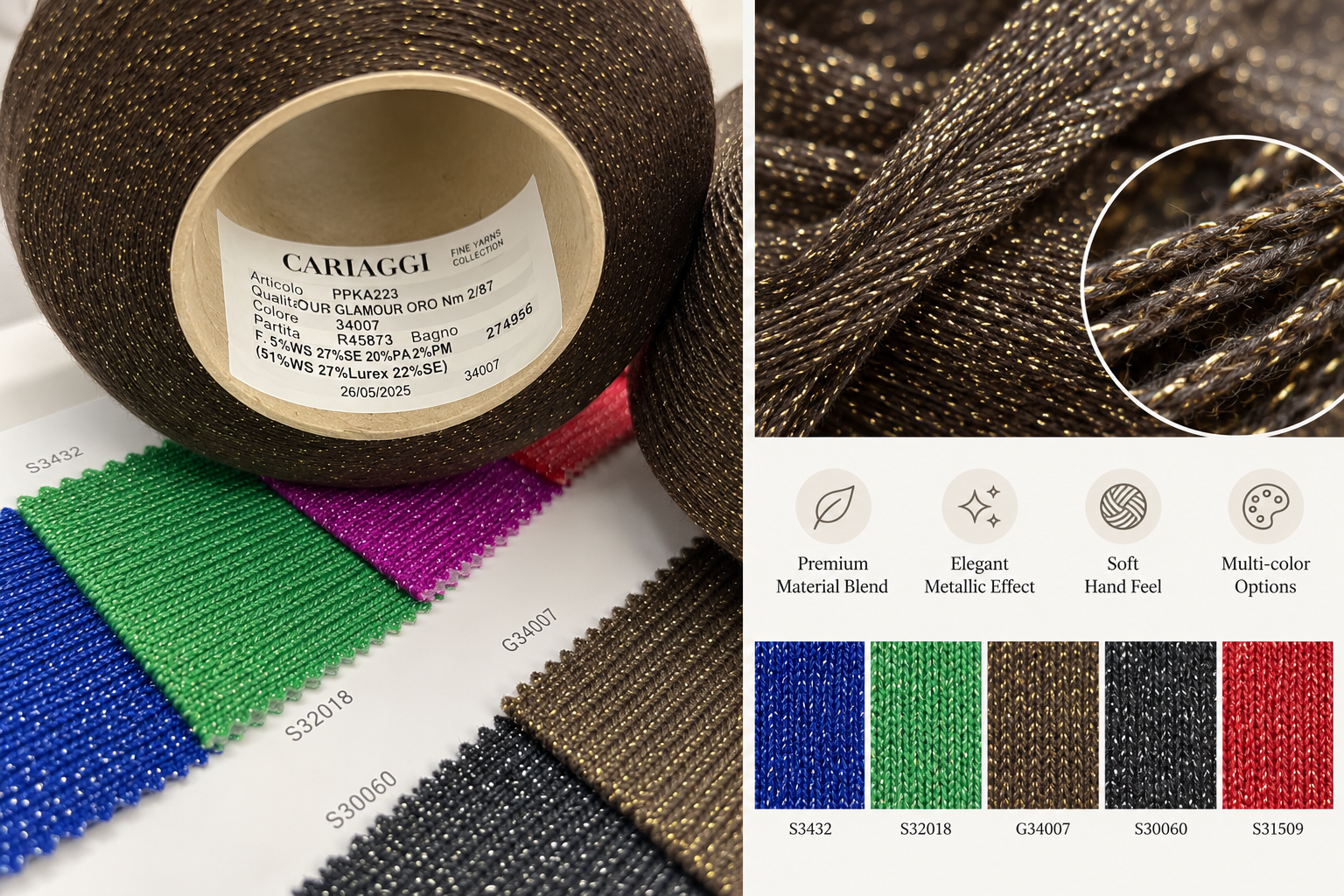
Some designer brands already work with established yarn suppliers and want their manufacturer to follow those material specifications. VIA KNIT can coordinate sourcing from client-nominated suppliers, including yarn producers such as Italy's Lineapiù and China's CONSINEE, subject to availability and purchasing conditions. For designers who have not selected a yarn, we can help evaluate materials according to the intended garment and fabric characteristics.
Our sourcing decisions also take supplier reliability into account. Previous purchasing experience, supply performance and material consistency can all inform the evaluation. However, choosing a recognised yarn supplier does not eliminate the need to assess the resulting fabric. We use knitted swatches to review appearance, handle and construction. Depending on the project, our evaluation may also include colourfastness and fabric stability checks.
The appropriate testing requirements depend on the garment and the specifications agreed with the client. We believe material selection should consider both the reliability of the supply source and the performance of the yarn in the intended product.
What Happens to Leftover Yarn in a Small Production Run?
Small orders can create differences between the quantity of yarn purchased and the amount ultimately used. Consider a 100-piece knitwear order divided into three colours. One colour may require approximately 5.2 kilograms of yarn for the estimated garment consumption. The actual purchasing and production arrangement might involve 6.3 kilograms. The difference is approximately 1.1 kilograms, although this should not automatically be treated as wasted yarn. Some of it may be needed for production allowances.
If yarn remains after manufacturing, the factory needs to consider how it will be handled. At VIA KNIT, we aim to limit unnecessary material waste through purchasing and production planning. In certain circumstances, it may be practical to discuss a small adjustment to the order quantity to improve yarn utilisation. Any change must be approved by the client and reflected in the confirmed production arrangements. Reducing waste matters, but so does fulfilling the agreed order accurately.
Both should be part of responsible small-batch manufacturing.
Should Designers Choose Stock or Custom-Dyed Yarn?
The right choice depends on the project. For an emerging label testing a new style, suitable stock yarns may offer greater flexibility in quantities and production planning. For an established brand with a distinctive colour palette, a custom shade may be an important part of the product. Neither option is inherently better. What matters is understanding the material requirements before finalising the production plan.
A designer should know whether the yarn is available, what quantity must be purchased and how long the material will take to prepare. At VIA KNIT, our role is to help evaluate these questions alongside the garment's design and technical requirements. Small-batch knitwear production is not simply about making fewer garments. It also requires selecting materials that work for the scale and purpose of the order.
Planning a New Knitwear Collection?
Whether you have a nominated yarn supplier or are exploring material options for a new design, VIA KNIT can discuss the yarn sourcing and development requirements of your project. Share your design references, preferred materials, colour requirements and estimated quantities with our team.